The Truth About Wood (Timber) Flooring
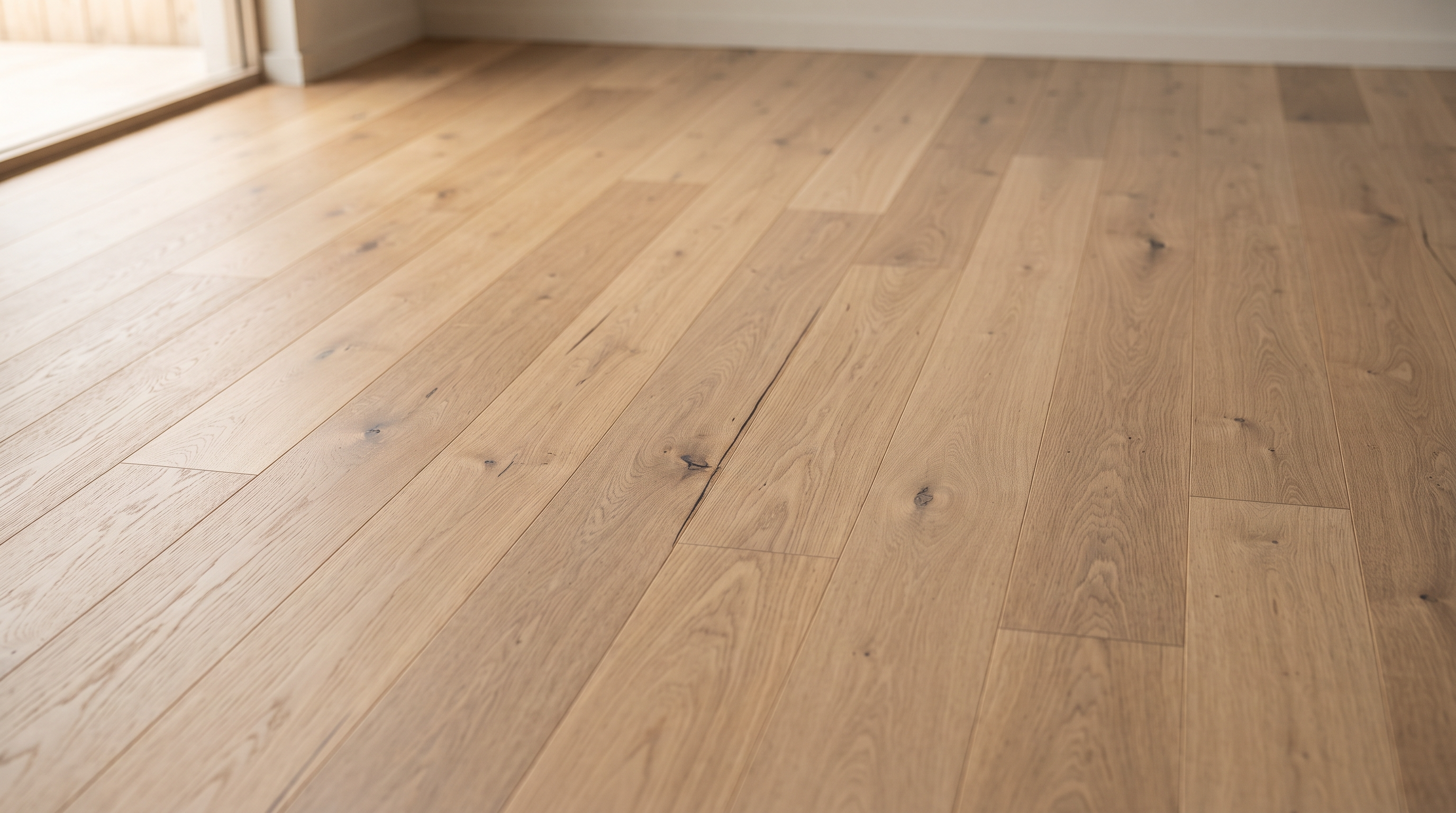
Most people love wood flooring but sometimes they’ve got questions. Why are there knots? Why isn’t the colouring consistent? Why does my flooring shift with the weather? Is there a problem? What’s going on?!?! Rest assured, none of these characteristics are flaws. Instead, they’re an indication that you’ve got a uniquely beautiful, genuine wood floor that features the grace of mother nature, forever to be admired.
Seven Features of Real Wood Floors that Are NOT Defects
KNOTS
A knot in the wood is usually a darker ring that shows where a branch of the tree was connected to the trunk. Much like a snowflake, you’ll never see the same knot twice. While knots are occasionally considered to be flaws Forestry Timber’s engineered hardwood flooring is structured in such a way that any potential weakness in the plank is mitigated by the engineering process and reinforced by the durable hevea core, ensuring the only consequence of knots in your flooring is added character and individualised beauty.
COLOUR VARIATIONS
Variations in colour on your engineered hardwood floor are an ode to nature’s creativity. The colour of the wood varies according to the species, the age of the tree, whether the boards contain sapwood and how much (sapwood is the outer part of the tree and tends to be lighter than the heartwood – the inner core), where and when the tree was harvested, and how the wood was processed (staining, fuming, etc.)
TANNIN BLEED
Tannins are a naturally occurring, water-soluble organic acid created by plants to ward off predators. They can be found in fruit, vegetables, wine, coffee, tea, and … trees. When it comes to flooring, tannins act as a natural preservative and protect your floors from damage due to insects, decay, and fungus. Tannins also contribute to distinctive colour variations in wood flooring, particularly oak. Tannin bleed (or pull) happens when the tannins “bleed” through the wood finish and leave marks behind if the wood comes in contact with water. At Forestry Timber, we understand the characteristics of various species of wood and treat them accordingly during the manufacturing process to reduce the incidence of tannin bleed. Forestry Timber is a world leader in reactive stain technology, using the process to enhance the timber’s natural attributes while utilising a more environmentally sustainable process. Click here to learn more about our reactive staining technology.
MEDULLARY RAYS
Medullary Rays, sometimes (incorrectly) assumed to be flaws, are present in all species of tree but are more evident in some species than others. They are plant cells that radiate out from the centre of the tree trunk, carrying nutrients essential to the survival of the tree. Until the wood is cut, nobody knows how the medullary rays will display themselves. These rays often run perpendicular to the grain of the wood and add depth and character to your flooring. Medullary rays are a sign of quality, indicative of genuine timber and are especially visible on oak flooring.
SEASONAL MOVEMENT
Cold, dry winters, hot and steamy summer days, indoor heating, air conditioning, rainy versus dry weather … each of these variables will affect your timber flooring, leading it to expand or contract, depending on the weather. Forestry Timber’s engineered hardwood flooring is manufactured using three-layer construction with a durable hevea core to provide dimensional stability and minimise seasonal shifting. Other ways to manage seasonal changes are to maintain even and consistent temperatures and humidity in your space.
END CRACKS
End cracks are a result of the drying process when the ends of the wood dry more quickly, creating small fractures at the end of a plank. Microscopic fractures can become more visible over time if improper cleaning techniques are used: steam cleaning floors, excess water used for cleaning, etc. not to mention fluctuations in humidity. Changing the way wood floors are cleaned as well as maintaining relatively consistent temperatures and humidity will go a long way toward minimising the appearance of end cracks on your floor.
MINERAL STREAKS
Mineral streaks show up as discoloured lines or spots on your wood flooring. Far from being a defect, they are indicative of the different mineral deposits in the soil where the trees have been grown in and vary by region. As with knots, variations in colour, medullary rays, etc., mineral streaks highlight the individuality of the tree, and no tree, plank, or floorboard will be the same. Flooring choices are highly personalised, and people want to feel confident in their flooring decisions. What can sometimes be perceived as flaws are more often the individual, beautiful characteristics of the wood flooring coming to light. At Forestry Timber, we have seven grading categories for the Western European Oak used in our engineered hardwood flooring. Not only does wood flooring add a level of unsurpassed sophistication to any space – whether office, retail, or home – it’s also durable, easy to maintain, and contributes to better overall air quality. Try our augmented reality tool to see how our floors will look in your space. For technical documentation and specification support, and to explore engineered hardwood collections, view the full product range, or request samples for project review, visit the Forestry Timber Export website. Article written by Forestry Timber
Accuracy of colour and wood characteristics: whilst we have made every effort to ensure the colours and wood characteristics displayed on our website are as accurate as possible these images may vary from the actual product.