
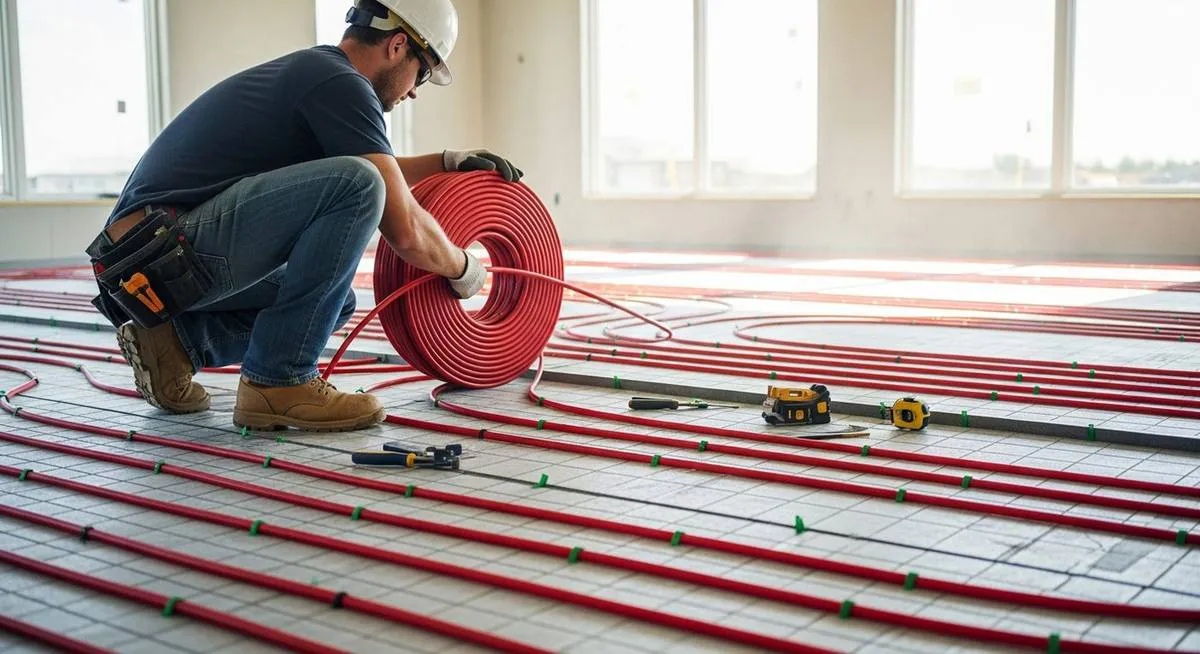
Underfloor heating compatibility — what every floor needs to know
Which floors work over hydronic and electric underfloor heating, max temperature limits, and how to commission a system without damaging your floor.
Underfloor heating and engineered timber can work together beautifully, with one quietly important caveat — the floor surface must never exceed 27°C. That single number governs everything else: the system type, the plank specification, the installation method, and the commissioning protocol. Get the temperature management right and you have a floor that delivers radiant warmth without dimensional drama; get it wrong and the floor will tell you, slowly and expensively.
This article explains how to specify engineered timber and hybrid for underfloor heating systems and what to expect across installation and commissioning. The same principles apply to both hydronic and electric systems, with the differences noted.
The 27°C surface temperature limit
The figure exists because engineered timber's dimensional stability is achieved through a balanced multi-ply construction. Excessive surface temperature drives moisture out of the plank faster than the underlying air can replace it, which causes the wear layer to lose dimension and the cross-grain backing to expand at a different rate — the recipe for cupping and check splits.
Most modern hydronic and electric underfloor heating systems can be programmed to a maximum surface temperature. The limit is published on the system's controller, and a competent installer will verify it before the plank is laid. A floor that has been heated to 32°C for a week is a floor with a problem.
Hydronic vs electric systems
Hydronic underfloor heating circulates warm water through cross-linked polyethylene tubing embedded in the slab or in a screed above it. It is energy-efficient, gentle in temperature swing, and the preferred system for engineered timber over a large area. The thermal mass of the slab smooths out daily temperature variation, which the timber prefers.
Electric underfloor heating uses resistance cabling or mats and heats more aggressively but with less thermal mass behind it. It is acceptable under engineered timber when the controller is properly limited and the system is sized for a low watts-per-square-metre output. Bathroom-style spot heating mats designed for tile floors should not be specified under engineered timber without confirmation.
Installation method over heated subfloors
Glue-down is the preferred installation method for engineered timber over underfloor heating. The bond moves heat into the plank evenly, the floor is dimensionally tied to the screed, and the warranty position is straightforward. Floating is acceptable with the right underlay — specifically an underlay rated for heated floors, which most generic acoustic underlays are not. The floating vs glue-down guide covers the trade-offs.
For commercial fit-outs over hydronic heating, glue-down is essentially mandatory. The commercial specification guide covers the documentation chain.
Commissioning protocol
The commissioning sequence matters. The heating system should be commissioned and run at service temperature for at least three days before the plank is delivered, ramping the surface to working range gradually. After installation, the system should be ramped back up over several days rather than switched on at full output. The first heating season is when the floor reaches its true equilibrium with the heated environment.
For glue-down installations, the adhesive's cure time must elapse before the heating is switched on — typically 5–7 days depending on the product. Switching on heat over uncured adhesive damages the bond.
Hybrid flooring over underfloor heating
SPC hybrid is dimensionally more stable than engineered timber and is the easier specification for underfloor heating. The 27°C surface limit still applies — partly for occupant comfort, partly for the long-term integrity of the wear layer — but the plank itself is less sensitive to seasonal swing. Our hybrid range is suitable for hydronic and electric systems when installed per the underlay specification.
The installation section includes the heated-floor protocols for each of our ranges, and the Australasian Timber Flooring Association publishes detailed technical notes on engineered timber over underfloor heating for further reading. The engineered timber landing page outlines our range positioning for heated installations.
System sizing for engineered timber
An underfloor heating system designed without engineered timber in mind will routinely be sized for tile or stone surfaces, where the surface limit can run higher. Reusing that sizing under a timber floor pushes the output too hard and the surface temperature too high. The right approach is to size the system specifically for the timber surface limit, accepting a lower watts-per-square-metre output and supplementing with a secondary heating source where needed. The studio team can advise on system pairings via the contact page, and the renovation vs new build article covers how the conversation changes for retrofitted hydronic systems.